How To
John Paul, AAA Northeast’s Car Doctor, hears from a reader who got a surprise after ordering new tires.
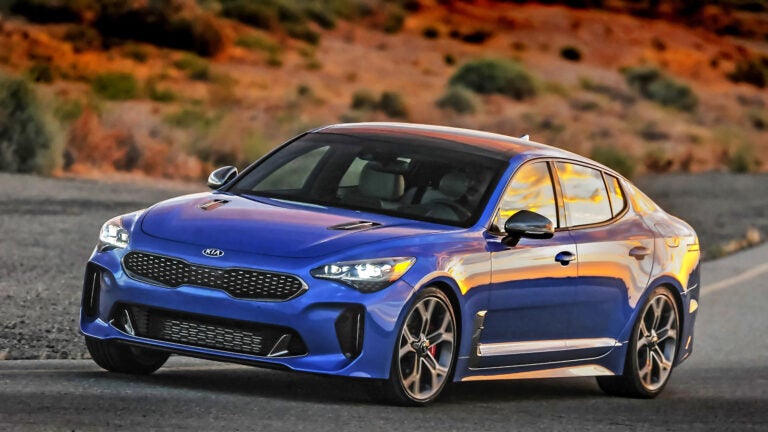
Q. I am a happy owner of a 2018 Kia Stinger and upon needing new tires, I visited a local tire store that has several locations in the state. The car has staggered tires where the front tires are a different size than the rear. I ordered the new tires over the phone, emphasizing that I wanted performance all-season since, through experience, the tread life is longer than dedicated summer tires. Several days after installation I thought to check the pressure and discovered the front set are summer performance while the rear tires are all-season. Although the tread patterns are vastly different, I did not notice any driving issue, so I decided not to pursue the discrepancy with the tire dealer. My question is, do you see any potential issues other than uneven front/rear tread life?
A. I am a big believer that all four tires should match. The 2018 Kia Stinger could be all-wheel drive or rear-wheel drive. Summer tires are exceptionally good in temperatures above 40 degrees, but in cold weather they will get hard and lose traction. This could affect braking and handling. If this is all-wheel drive, the different tires could affect how the all-wheel drive system works, as well as affecting handling, traction, and braking. If this were my car I would want to see the same tires on all four wheel positions. I would head back to the tire store to have this issue sorted out.
Q. There are four cars in my household. Their combined age is over 50 years. The fourth car is a 2020 Jeep Grand Cherokee. I am very diligent about oil changes and tire rotation – it is a pet peeve of mine. My question is whether I should follow the sticker reminder on the windshield, which is based on miles and calendar date, or should I follow the Jeep’s oil reminder which gives a percentage number based on oil quality. I usually change the oil when the Jeep indicates between 20 and 30 percent while the service station uses a 4,000-mile schedule. I use Mobil One synthetic for all oil changes so 4,000 miles might be a little low. What do you think?
A. Some electronic oil reminders are based on mileage, some are time, and some measure a combination of items using an algorithm to determine when the oil needs changing. Generally the indicators are pretty dependable. Jeep states that under no circumstances should oil change intervals exceed 10,000 miles or twelve months, whichever comes first. This leads me to believe the system just looks at time and mileage and not engine temperatures, repeated starting, and other factors that could affect oil change intervals. If it were my car I would go with something in the middle – perhaps every 6,000 to 7,500 miles or six months, whichever comes first. I agree that 4,000 miles with full synthetic oil is a bit soon, although it can’t hurt. Even though 10,000 miles is the Jeep recommendation, that to me is too long especially with some of the camshaft issues that are well known with Pentastar engines.
Q. We have a 2020 Subaru Outback. Each time we start the car, we disengage the engine stop feature. There does not appear to be a way permanently to disable it within the car itself. My husband is planning on installing an aftermarket product to disable this feature. Just wondering what your opinion is on this and could there possibly be a downside?
A. The idle stop features are designed to save fuel and lower vehicle emissions. At AAA we have evaluated this and found it to be true. That being said the transition from engine off to starting can be rough and annoying with some cars. I do not have any issue with bypassing the system. The bypass kits that I have seen plug into the “EyeSight” system and do not allow the engine to shut down. As long as the bypass does not affect other systems, I do not see this being any different than pushing the bypass button every time you get in the car. The only systems that I do not care for are the ones that plug into the diagnostic connector. This port was never designed for constant two-way communication.
Q. My 2017 Honda Accord with approximately 45,000 miles is due for brakes. The Honda dealership pricing is lower. They said they resurface the brake rotors versus my local mechanic who stated they do not have the machine to cut rotors and it is better to get brand new rotors. Their quoted pricing is more expensive. Is it better to get new rotors or is it just as fine to have them resurfaced?
A. When a Honda vehicle is under warranty, Honda requires dealers to resurface brake rotors, using an on-the-car brake lathe rather than replace the rotors. Resurfacing brake rotors adds about an hour of labor to the brake repair. In my opinion replacing the brake rotors with a new quality part will better guarantee a better brake job with less chance of vibration. Resurfacing brake rotors takes away metal, and thin brake rotors will not dissipate as much heat and are more likely to result in a vibration over time. The factory brake discs are $120 each versus an hour labor to resurface the rotors. For what could amount to less than $100 difference in the two brake jobs, I would rather have new rotors with my new brake pads.
John Paul is AAA Northeast’s Car Doctor. He has over 40 years of experience in the automotive business and is an ASE-certified master technician. E-mail your Car Doctor question to [email protected]. Listen to the Car Doctor podcast at johnfpaul.podbean.com.
Sign up for the Today newsletter
Get everything you need to know to start your day, delivered right to your inbox every morning.
Cars,Car Doctor,Car Guides,How To#important #front #rear #tires #match1767867755