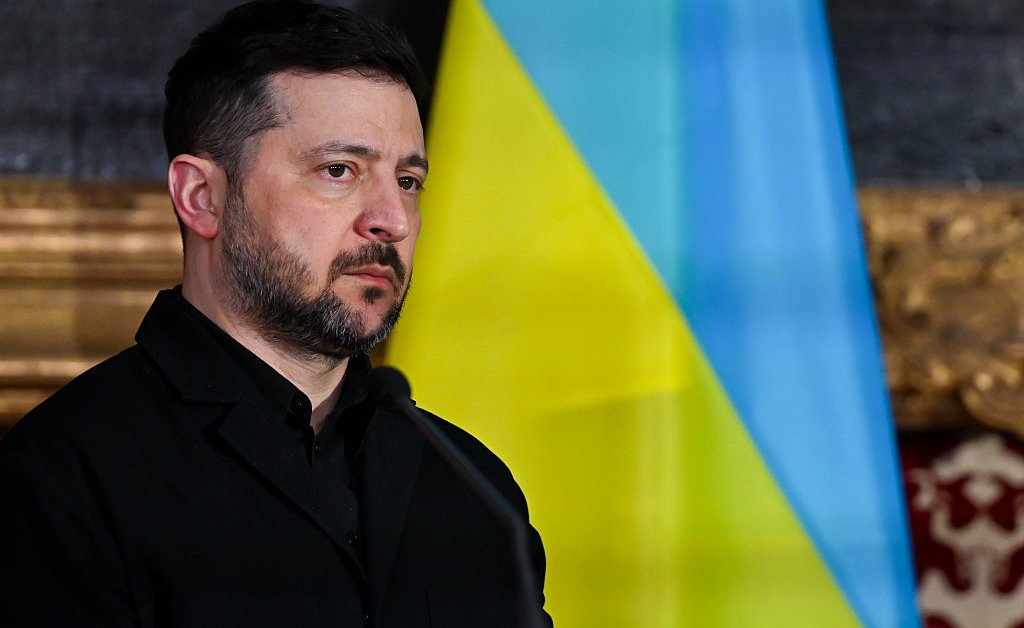
The second day of peace talks between Ukrainian and Russian officials in Geneva ended abruptly Wednesday morning, after just two hours of discussions.
Ahead of the sit-down, Ukrainian President Volodymyr Zelensky had remarked upon the “difficult” first day of negotiations, which lasted six hours, and accused Russia of stalling progress.
“We can state that Russia is trying to drag out negotiations that could already have reached the final stage,” he said. “I set a clear task for the Ukrainian delegation—to do everything possible so that the negotiations are nonetheless productive and increase the chances for peaceful solutions.”
After the talks ended, Zelensky reportedly told members of the press over WhatsApp: “We can see that progress has been made, but for now, positions differ because the negotiations were difficult.”
Rustem Umerov, head of the on-site Ukrainian delegation, also delivered a brief statement, describing the discussions as “intensive and substantive.”
“Within the delegation, both political and military tracks were engaged, and security parameters and mechanisms for implementing possible decisions were discussed. A number of issues were clarified, while others remained under additional coordination,” he said.
Russia’s chief negotiator, Vladimir Medinsky, similarly described the talks as “difficult, but businesslike,” adding that “the next meeting will take place soon.”
During a White House press briefing Wednesday afternoon, press secretary Karoline Leavitt said “meaningful progress” had been made and reiterated that “another round of talks” will take place in the future. An exact date was not given.
TIME has reached out to the Russian and Ukrainian foreign ministries for further comment.

Security guarantees and proposed land concessions remain at the heart of the Ukraine-Russia stalemate. Moscow is fighting for Ukraine to give up parts of the Donbas region that Ukrainian forces still control. Ukraine has repeatedly rejected any such land concessions.
The U.S. mediation team—led by Special Envoy Steve Witkoff and Jared Kushner, President Donald Trump’s son-in-law—are expected to largely focus on these territorial disputes when talks resume.
The Geneva negotiations had already been somewhat overshadowed by renewed fighting. Zelensky said Russia launched a missile strike on the same day talks began.
“Russia greets with a strike even the very day new formats begin in Geneva—trilateral and bilateral with the United States. This very clearly shows what Russia wants and what it is truly intent on,” he said, urging U.S. officials to press Moscow to refrain from further attacks.

Meanwhile, Zelensky told Axios on Tuesday that it was “not fair” for Trump to have publicly called on Ukraine to make concessions for peace. He said he hoped those remarks were “his tactics and not the decision.”
By contrast, Zelensky said his conversations with Kushner and Witkoff do not involve that kind of pressure. “We respect each other,” Zelensky said, adding that he is not a person who folds easily.
When asked about Zelensky’s remarks at the White House press briefing on Wednesday, Leavitt said: “I think the President would respond to that by saying he does not think it’s fair that thousands of Ukrainians are losing their lives, and Russians too, in this deadly war… the President views this entire situation as very unfair.”
Zelensky’s comments came after Trump told reporters at the White House on Feb. 13: “Russia wants to make a deal and Zelensky is going to have to get moving. Otherwise, he’s going to miss a great opportunity.”
On Feb. 16, the day before the peace talks in Geneva, Trump revisited the topic once more, telling reporters aboard Air Force One: “Ukraine better come to the table, fast. That’s all I’m telling you. We are in a position, we want them to come.”
Progress stalls as fourth anniversary of Russian invasion looms
Next week marks the fourth anniversary of Russia’s full-scale invasion of Ukraine. With another round of peace talks ending abruptly, and little sign of compromise over key issues such as land concessions, a stable peace agreement remains elusive.
Ahead of returning to the White House, Trump vowed to end the Ukraine-Russia conflict on his first day back.
In an April 2025 interview with TIME marking his first 100 days back in office, Trump said the 24-hour timeline had been “said in jest” but emphasized the war “will be ended.” Trump added that he and Russian President Vladimir Putin had shared “very good talks” and a deal was “very close.” That deal has yet to materialize.
While the U.S. has stayed on as mediators between the two warring countries, tensions between the Trump Administration and Ukrainian leadership have, at times, proved distracting.
During a heated Oval Office exchange in February last year, Vice President J.D. Vance accused Zelensky of being ungrateful. Trump seemingly agreed, telling the Ukrainian leader: “You don’t hold the cards… You’re gambling with World War III!”
In a March 2025 interview with TIME, Zelensky suggested the moment reflected a broader pattern and claimed that U.S. officials had begun taking Putin at his word. “I believe Russia has managed to influence some people on the White House team through information,” Zelensky said. “Their signal to the Americans was that the Ukrainians do not want to end the war, and something should be done to force them.”
Since then, significant shifts have taken place. Trump urged Ukraine to abandon it’s long-sought efforts to join NATO, Kyiv signed an agreement granting the U.S. preferential access to new Ukrainian minerals, and the Trump Administration shared a 28-point plan for peace. The widely-leaked proposal reportedly included calls for Kyiv to reduce its army and make territorial concessions—terms Ukraine swiftly rejected, as they have done before. It has since been revised following talks with both camps.
Trump, in January, also invited Russia to join his Gaza Board of Peace—a move that sparked concern among European leaders. Notably, when Trump previously floated the idea of allowing Russia to rejoin the G7, Zelensky warned it would lift the most concrete punishment Putin has faced since the invasion: isolation. “That’s a big compromise,” Zelensky told TIME last year. “Imagine releasing Hitler from his political isolation.”
Uncategorized,News DeskUkraine,News Desk#UkraineRussia #Peace #Talks #Abruptly #Zelensky #Moscow #Drag #Negotiations1771448115