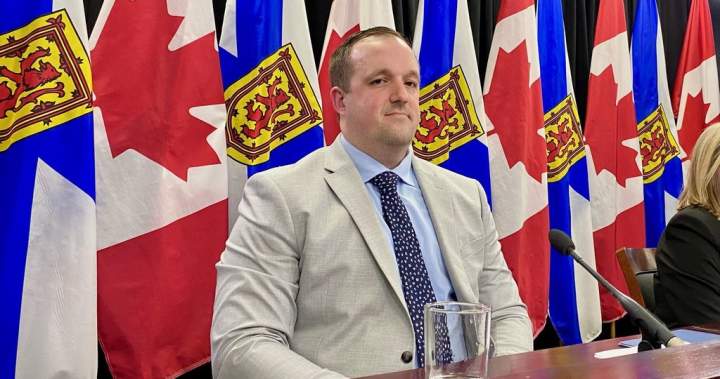
Nova Scotia’s minister for addictions and mental health says he has not reached out to the First Nation community that announced this week it would declare a state of emergency over a crisis of illicit drugs and addiction.

Brian Comer told reporters after a cabinet meeting Thursday his department does everything it can to support folks living with addiction and mental health issues, but said he’s not had direct contact with Sipekne’katik First Nation.
“There has not been a reach-out to us directly, although that door is always open for further conversations,” he said.
Comer said the province funds three clinical therapists who offer care to Mi’kmaq communities in the northern health zone, which covers Sipekne’katik First Nation, and recently opened a recovery centre in Truro, N.S., which provides harm reduction and substance-use support.
“That being said, if there is an increased need for that service, that’s certainly a conversation. We would do whatever we could to support,” he said.
After Comer’s remarks, the Addictions and Mental Health Department said in an email that Sipekne’katik had requested help from one of the department’s partner organizations for basic first aid and naloxone — a medication that reverses the effects of opioid overdoses. The spokesperson said the department is working with emergency health services and the health authority to make that happen.

Get weekly health news
Receive the latest medical news and health information delivered to you every Sunday.
On Tuesday, Sipekne’katik First Nation said its council had moved to begin the process of declaring a state of emergency over an “escalating crisis of illicit drugs and addictions.”
“We are facing far too many emergencies, overdoses, and tragedies. The loss, fear, and trauma experienced by our families, elders, youth, and front-line workers cannot be ignored,” reads the statement from Chief Michelle Glasgow and council.


The First Nation said it has notified the RCMP that it will be supporting a $20,000 reward for information leading to the arrest and conviction of individuals selling illicit drugs within the community, including but not limited to cocaine and illegally distributed prescription drugs. It also said it would evict residents from their housing units if there is reasonable suspicion that a home is being used for the sale or distribution of illicit drugs.
Glasgow did not immediately respond to a request for comment Thursday.
Claudia Chender, leader of the official Opposition NDP, said Thursday the government should have immediately reached out to Sipekne’katik leadership to offer mental health and addictions resources.
Liberal member Derek Mombourquette said what’s happening in Sipekne’katik is “devastating” and that he doesn’t understand why the province hasn’t tried to contact the First Nation to offer help.
“The government should not wait. The government should go in. That’s what governments are there for,” he said, adding that the province would never wait to be called on before offering support in the case of a natural disaster, for example.
“I’m really surprised that the government hasn’t reached out at all. That’s their first responsibility: support the most vulnerable Nova Scotians that are in need,” Mombourquette said.
© 2026 The Canadian Press
Health,Politics,Addictions and mental health,Sipekne’katik First NationAddictions and mental health, Sipekne'katik First Nation, Health, Politics#outreach #N.S #minister #addictions #mental #health #Nation #crisis1770931365