Local News
The last cost estimate, from late 2024, was $91 million. A pro women’s soccer team will also contribute $190 million.
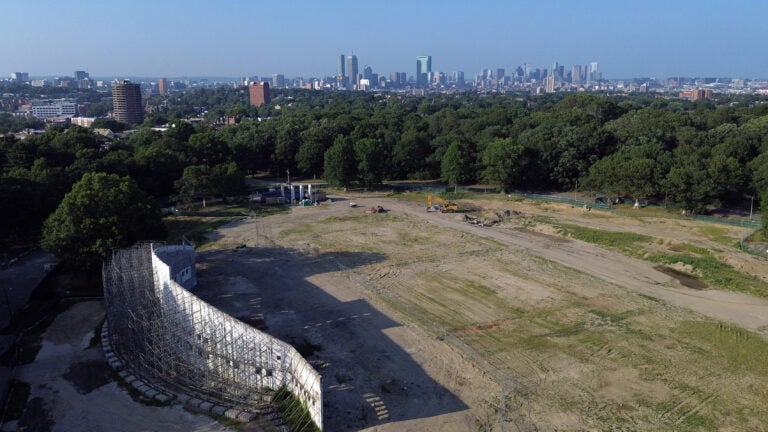
Boston Mayor Michelle Wu announced Friday that the city would spend $135 million in taxpayer dollars to renovate White Stadium in Franklin Park.
-
Massachusetts Supreme Judicial Court to take up White Stadium case
-
What to know about Boston’s proposed Madison Park school rebuild — and why some in Roxbury say it’s a step backward
Wu has made overhauling the dilapidated stadium a major focus of her time in office. She has fended off questions about rising costs for months, saying that the city needed to finalize construction bids before offering a new estimate. The last estimate came in late 2024, when the city said that it would cost $91 million.
The contentious project is based on a public-private partnership with a new professional women’s soccer team. The team, Boston Legacy FC, will eventually play their home games in White Stadium. It will also be open daily for Boston Public Schools student-athletes. BPS will host football and soccer games, track meets, and more there.
Boston Legacy FC announced Friday that it will spend $190 million on its share of the renovation project. The team is expected to pay more than $252 million in community benefits over the next 15 years, the largest community benefits agreement in the city’s history, according to officials.
The new stadium will have a professional-grade grass field and a collegiate-level eight-lane track. BPS students will also get access to dedicated strength and conditioning facilities, a sports medicine center, and flexible indoor study spaces. Wu is pitching it as a new citywide hub for athletics that will be used by thousands of students every day.
“We are going to have the best student athletics facility in the country here in Boston, and that is going to be something that will transform our city for generations,” Wu said at a press conference Friday.
The project has faced highly coordinated opposition from its inception. The Emerald Necklace Conservancy, a local environmental nonprofit, and a group known as the Franklin Park Defenders are leading the way.
They previously sued the city, arguing that the Wu administration is violating state law that governs the use of public parkland. After a trial last year, a Superior Court judge ruled in favor of the city, allowing the project to proceed. Opponents appealed the decision, and the matter is now before the state’s highest court.
Opponents object to the partnership with Boston Legacy FC and say that the city should be pursuing a more affordable stadium that would be used exclusively by BPS students. Dorchester resident Louis Elisa, a member of Franklin Park Defenders, ripped Wu’s announcement in a new statement.
“There is still plenty of time for the City to reconsider this fatally-flawed project, and instead build a much more affordable, fully-public high school stadium that meets the needs of BPS students and their families — not those of professional athletes and their investors,” he said.
Elisa pointed to an initial $30 million estimate that investors gave in 2023 and said that “it’s only fair” to expect costs to continue to increase beyond the $135 million figure Wu unveiled Friday.
A final price tag
The city’s cost of construction is protected by a guaranteed maximum price contract, Wu said. This is the final, “locked” price tag, she added.
The main reason for the increasing costs, Wu said, is that city officials wanted to be more responsive to residents.
“We heard from community members that there were all of these dreams, and hopes, and goals. And we decided to make the project better and therefore more expensive in response to that,” she said.
The $91 million estimate was “very preliminary,” according to the mayor. One of the largest recent cost increases came from the decision to use grass instead of artificial turf for the field.
Wu also cited “inflationary pressures” exacerbated by the Trump administration’s focus on tariffs. The price of steel, in particular, has increased significantly.
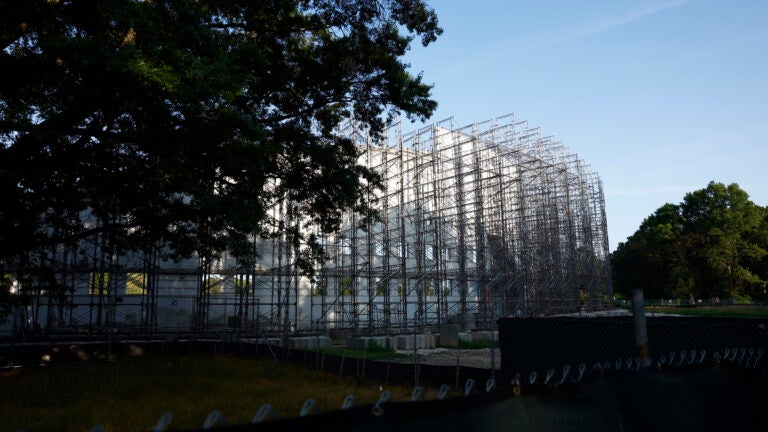
Demolition work began about a year ago, and crews have been focusing on sub-surface utility and foundation work in recent months. “Vertical construction” is set to begin in late March. Officials say that the project will create more than 500 construction jobs.
Boston Legacy FC, meanwhile, will play its debut season at Gillette Stadium while the project is finished. Its first game is scheduled for March 14.
“For Boston Legacy FC, investing in White Stadium is as an investment in the next generation — creating access, inspiration and opportunity across Boston,” Jennifer Epstein, controlling owner of the team, said in a statement. “Through our privately funded commitment of more than $250 million over the next 15 years, we’re ensuring that White Stadium remains a City-owned, year-round public asset for Boston Public Schools students and the community for generations.”
Officials have committed $43 million to contracts with “Minority/Women-Owned Business Enterprises,” representing 44% of all contracts awarded to date. Tens of millions in contracts are expected to be awarded to local businesses during the next phase, and the city is planning a contracting fair to promote these opportunities.
The City of Boston will continue to own the stadium. The team will pay rent and a portion of in-stadium advertising, naming rights, and concessions revenue to the city. This will go toward investments in Franklin Park and other neighborhood properties, as well as a new BPS athletics fund. The team and the city have signed a 10-year lease.
Transportation concerns
Opponents have also raised concerns about how the new stadium will impact traffic around Franklin Park. They say that the city has not studied the potential traffic impacts enough and have not answered essential questions about this topic.
A transportation plan is available online that includes many details, including the fact that no on-site parking will be available on days when the pro soccer team plays. Instead, a “ticket-linked transit” system will be implemented: Spectators will pre-select their mode of travel when purchasing their tickets. They will choose between free shuttles from satellite lots, shuttles from MBTA stations, biking or walking, or a rideshare/drop-off option. Fans will then be given custom instructions. The city is committed to deploying a shuttle fleet that is entirely electric within the first three years of operation.
A series of public meetings on transportation specifically are planned for the spring, officials said, and the city is collecting public comment.
“A professional soccer stadium that chokes our streets with traffic from hundreds of shuttle buses and ride-share vehicles is not a community benefit. A professional soccer stadium that prevents us from using our public park for cookouts and walks is not a community benefit. This private project is not a community benefit, it’s a burden,” Renée Stacey Welch, a Jamaica Plain resident and Franklin Park Defenders member, said in a statement.
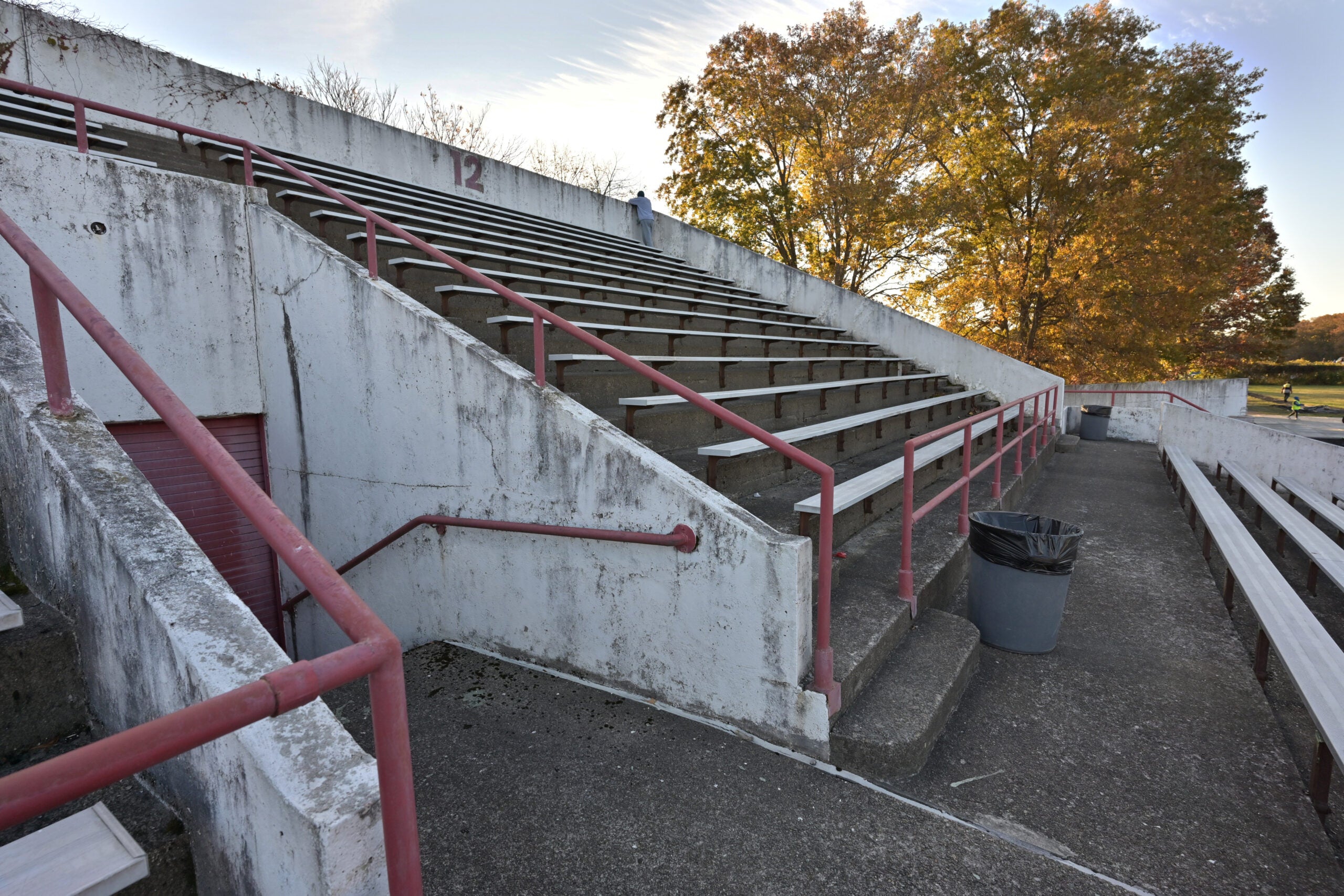
Despite the vocal opposition, the White Stadium project also has deep support among other residents, school leaders, and elected officials. The stadium was originally built in 1949 and renovated in the ’80s before a fire seriously damaged a grandstand in the ’90s. It fell into disrepair, lacking running water, heat, indoor training spaces, and field drainage before this project got underway.
“Our Boston kids deserve nothing less than the best, and we’re going to continue to fight for them to have every possible opportunity,” Wu said. “This creates the chance for the facilities to match their talent and their potential, for the resources to be there to fund that year, after year, after year.”
Sign up for the Today newsletter
Get everything you need to know to start your day, delivered right to your inbox every morning.
News,Dorchester,Jamaica Plain,Local News,Massachusetts News,Michelle Wu,Neighborhoods,Roxbury,Soccer,Sports,Sports News,Women’s Sports#Boston #spend #million #taxpayer #dollars #White #Stadium #overhaul1770402066