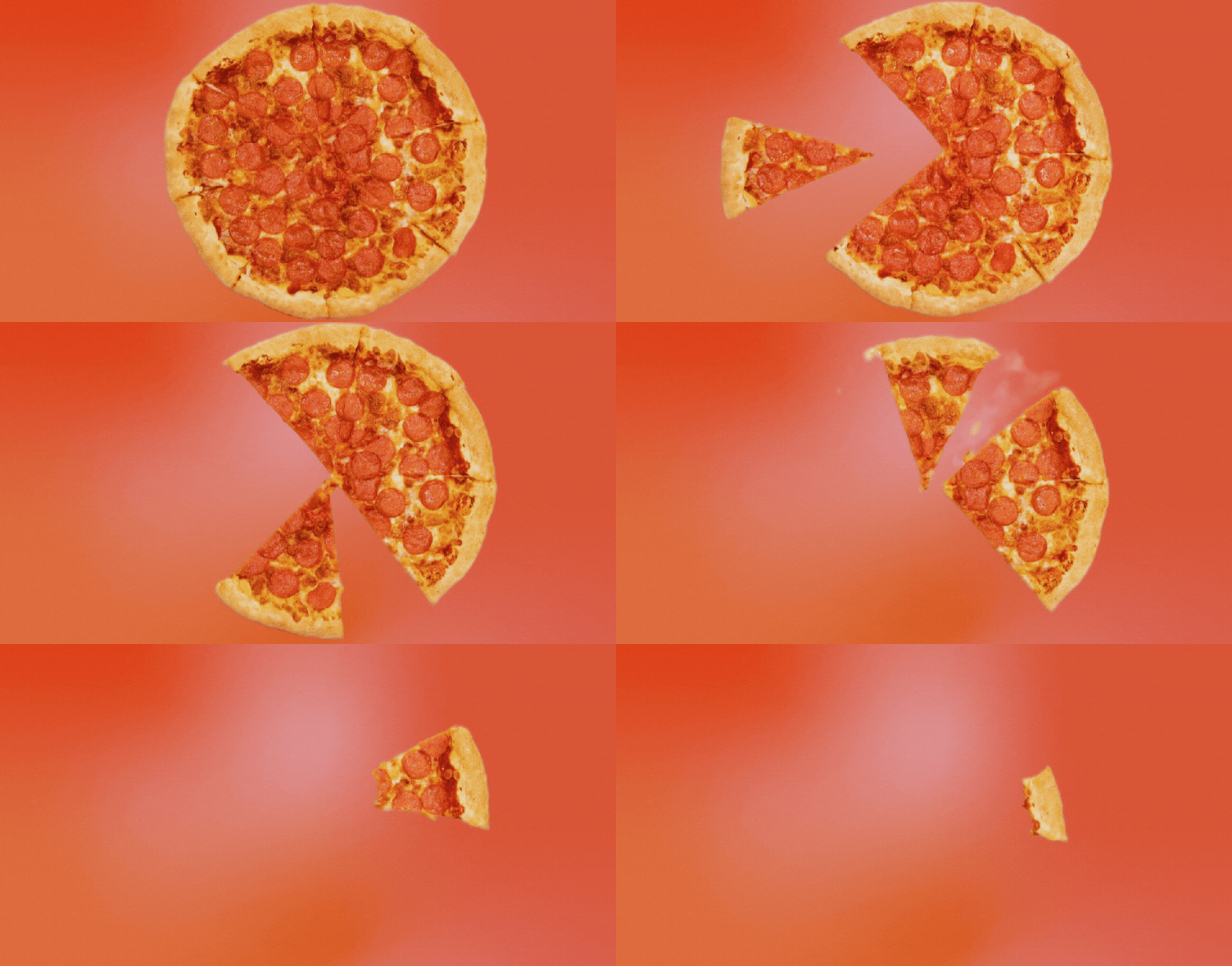
People eat quickly for all kinds of reasons. Some have developed the habit because of modern-day time constraints. Others grew up in big families where you needed to eat quickly if you wanted seconds. Many people are just so distracted by their screens and scrolling they nosh at a faster pace.
But eating quickly isn’t always a harmless habit; it can potentially lead to digestive issues, blood sugar spikes, and overeating.
Here’s why eating too fast can harm your health—and how to slow down.
What happens when you speed-eat
“Eating too quickly can have negative effects on our GI system,” says Dr. Justin Field, a gastroenterologist and assistant professor of medicine at the University of California, San Francisco. When someone eats too quickly, he says, they tend to not chew their food as much, leading to larger food particles entering the stomach. People also tend to swallow more air when they eat quickly. “The combination of those two can lead to bloating, feeling discomfort after a meal, more acid reflux symptoms, and then overeating potentially.”
A meta-analysis published in the International Journal of Obesity in 2015 found a link between eating quickly and obesity, and a 2021 study published in Frontiers in Nutrition tied eating fast to a greater risk of obesity, high blood pressure, elevated triglycerides, and metabolic syndrome, which can increase someone’s risk of developing heart disease and Type 2 diabetes. One 2024 study published in Nature found that frequently eating fast was associated with an increased risk of nonalcoholic fatty liver disease.
Why it’s good to slow down
Fast eating doesn’t directly cause weight gain, but it does increase the likelihood someone will overeat and experience blood sugar spikes after meals, which can contribute to weight gain over time, says Dr. Jaime Almandoz, a professor of medicine and medical director of the Weight Wellness Program at UT Southwestern Medical Center in Dallas.
Read More: What to Do If Your Friends Keep Leaving You Out
When people eat quickly, they often don’t allow enough time for their brain to register that their stomach is full. “Slower eating allows the gut-brain signals to register fullness,” Almandoz says. “It reduces the glucose spikes we see with meals, and it aligns our food intake with physiologic hunger, rather than speed, efficiency, or stress. Over time, this can help support healthier weight regulation and better metabolic health.”
How can you slow down? Here are five expert-backed tips.
Select foods that take more time to chew
“Digestion really starts in the mouth,” Field says. “The easiest way to slow down eating is to choose foods that require more chewing.”
Pick foods that take more time to break down, like legumes, nuts, seeds, fruits, and vegetables. When it comes to protein, opt for steak over ground beef or grilled chicken breast over deli meat. “The foods that are harder to eat are also the foods that tend to be better for us and more nutritious,” Field says.
Avoid ultra-processed foods and fast food
Ultra-processed foods are engineered to taste good, feel good in your mouth, and be eaten quickly, Field says. They’re also more calorie dense, Almandoz adds, which means you can “consume calories more quickly without putting in as much work.”
Small changes can make a big difference. Opt for pistachios instead of potato chips or rice and beans instead of tortilla chips.
Be more mindful during meals
Engaging in mindfulness at the table can help you not only slow down, but also enjoy your food more. Almandoz recommends pausing halfway through a meal and putting utensils down between bites. “Slowing down can really help restore the timing between eating and the signals that regulate fullness,” he says.
Read More: The 1-Minute Trick to Calming Down Your Nervous System
Almandoz also recommends minimizing screen time and distractions during meals. One 2021 study published in Public Health Nutrition found that more than half of adults ate while watching TV at least once in the previous week. Turning off the TV and setting your phone down can help you consume your food more intentionally.
Eat for your stomach, not your mouth
When you’re eating, the primary sensations you feel in your mouth are related to pleasure and enjoyment, says Dr. Wajahat Mehal, a professor in digestive diseases at the Yale School of Medicine and director of the Yale Metabolic Health and Weight Loss Program. If it tastes good, you’ll want more—even when your stomach is telling you you’re full.
“The sensations in our stomach are obviously not as bright as the sensations from our mouth, but they’re there if we pay attention to them,” he says. “We need to pay attention to what our stomach is feeling as much as we pay attention to what our mouth is feeling.”
Enjoy the company of others
A survey from the 2025 World Happiness Report found that 26% of adults in the U.S. had eaten every single meal alone in the previous day.
“When we eat in company and we’re chatting with somebody and then stopping and listening to them, that tends to slow us down,” Mehal says. “It’s easy to see that if we’re just eating by ourselves, then we’ll eat faster.”
Read More: How to Train Your Brain to Be More Patient
Some people prefer to eat alone as a way to ground themselves during a particularly busy or social day. You don’t have to eat every meal with others, but consider doing it more frequently; ask a coworker to lunch once a week, or make sure your whole family spends each weeknight at the dinner table together.
While eating more slowly can be better for health and help you enjoy your meal more, Mehal says it’s important not to add more stress to your plate by trying to achieve the perfect eating speed. Above all, remember that food—eaten at any pace—nourishes the body. “Food is positive. Food is good. Food is nutrition,” he says. “Let’s not make it into a negative thing in our lives.”
Uncategorized,Evergreen,freelanceDiet & Nutrition,Evergreen,freelance#Eating #Fast #Hurting #Health1769092896