The Republican-led Senate on Thursday backed a resolution seeking to curb President Donald Trump’s ability to carry out further military action against Venezuela without congressional approval, delivering a largely symbolic rebuke from lawmakers of both parties just days after a dramatic U.S. raid that captured the country’s president.
The War Powers Resolution advanced 52 to 47, with Democrats joined by five Republicans: Sens. Josh Hawley of Missouri, Todd Young of Indiana, Lisa Murkowski of Alaska, Susan Collins of Maine, and Rand Paul of Kentucky. The resolution is set to soon move to the House, where Republicans hold a narrow majority and previously rejected a similar measure. Its prospects there remain uncertain, and even if it were to pass, Trump is expected to veto it.
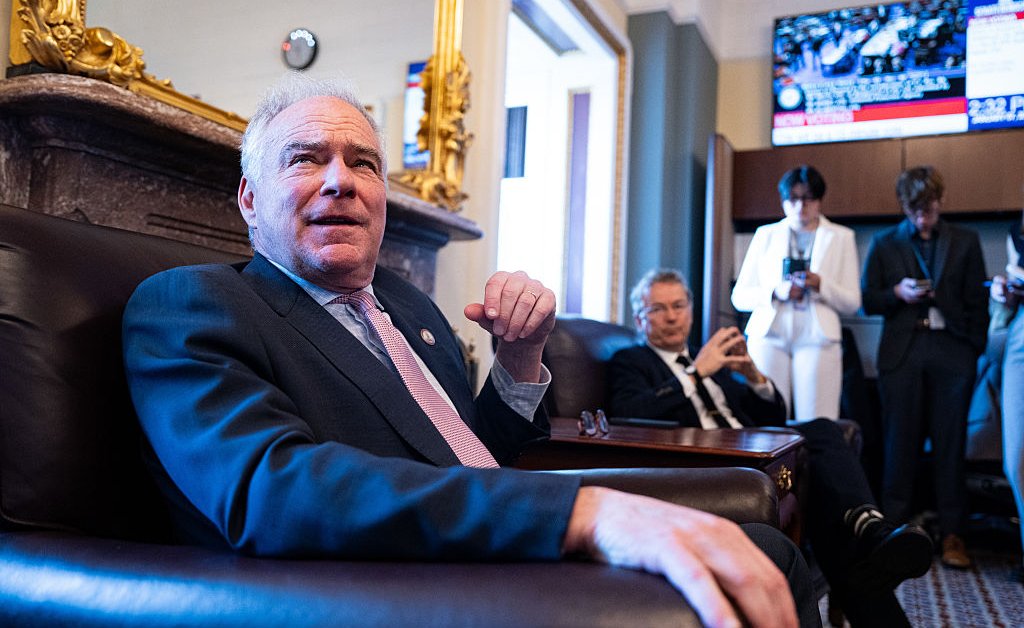
The resolution, brought forward under the War Powers Act and led by Democratic Sen. Tim Kaine of Virginia, would require Trump to seek explicit authorization from Congress before carrying out additional military strikes or sustained operations against Venezuela. It does not retroactively block the raid that led to the capture of President Nicolás Maduro, but it aims to prevent the Trump Administration from expanding what critics fear could become a prolonged campaign to reshape the Venezuelan government and control its oil resources.
“The Constitution is clear—only Congress can declare war,” Paul, a sponsor of the resolution, said on the Senate floor. “Our founder’s intent is not a close call open to equivocation.”
Read more: What’s Happening With the U.S. and Venezuela, Explained
Under the War Powers Resolution, passed in 1973 over President Richard Nixon’s veto, presidents must notify Congress within 48 hours of deploying U.S. forces and must end hostilities within 60 to 90 days without authorization.
The vote came one day after all members of Congress received a classified briefing from top Trump Administration officials on the Venezuela operation, a session that left several lawmakers saying Congress had been kept in the dark as the United States crossed a consequential new threshold overseas.
In a post on Truth Social, Trump called out the five Republicans who voted to strip his war powers—saying they “should never be elected to office again.”
“This Vote greatly hampers American Self Defense and National Security, impeding the President’s Authority as Commander in Chief,” Trump added. “In any event, and despite their ‘stupidity,’ the War Powers Act is Unconstitutional, totally violating Article II of the Constitution, as all Presidents, and their Departments of Justice, have determined before me.”
The Senate’s action followed months of failed attempts to rein in Trump’s war powers as his Administration steadily escalated pressure on Venezuela, including repeated strikes on vessels off its coast and sweeping seizures of Venezuelan oil shipments. A similar resolution narrowly failed in November, falling short by a 51–49 margin after only two Republicans backed it. Thursday’s vote marked the third time lawmakers confronted the issue on the Senate floor since last year—and the first time the measure cleared the chamber.
The turning point came after the surprise nighttime raid in Caracas over the weekend, when U.S. forces seized Maduro and his wife, Cilia Flores, and transported the Venezuelan leader to the United States to face drug and weapons charges. Administration officials have characterized the operation as a law enforcement action, arguing that it falls within the President’s authority as commander in chief. But many lawmakers, including some Republicans, said that explanation strained credulity given the scale of the mission.
Several senators said they felt misled by earlier briefings in which administration officials had suggested the United States did not intend to carry out strikes on Venezuelan territory or seek to change its government. Trump’s comments that his Administration would run Venezuela for the foreseeable future deepened concerns on Capitol Hill.
Senators who backed the resolution said they were particularly worried about the possibility that the Venezuela operation could serve as a precedent for future actions, including against Greenland, an autonomous territory of Denmark and a NATO ally. Trump has repeatedly floated the idea of asserting U.S. control over Greenland, and White House press secretary Karoline Leavitt has said that military action is “always an option at the Commander in Chief’s disposal.”
Thursday’s Senate vote was framed as an attempt to draw a clear constitutional line before such scenarios materialize.
Senator Young, one of five Republicans who backed the resolution, said his vote was “about potential future military action, not completed successful operations.”
“The President and members of his team have stated that the United States now ‘runs’ Venezuela,” he added. “It is unclear if that means that an American military presence will be required to stabilize the country. [I am] not prepared to commit American troops to that mission.”
Uncategorized,CongressCongress#Senate #Backs #War #Powers #Measure #Intended #Block #Trump #Venezuela1767900027