The Trump Administration sharply escalated its enforcement of a blockade on Venezuelan oil exports on Wednesday, seizing two tankers in separate operations across the Atlantic and Caribbean and signaling that the United States intends to exert direct control over how Venezuelan oil reaches global markets.
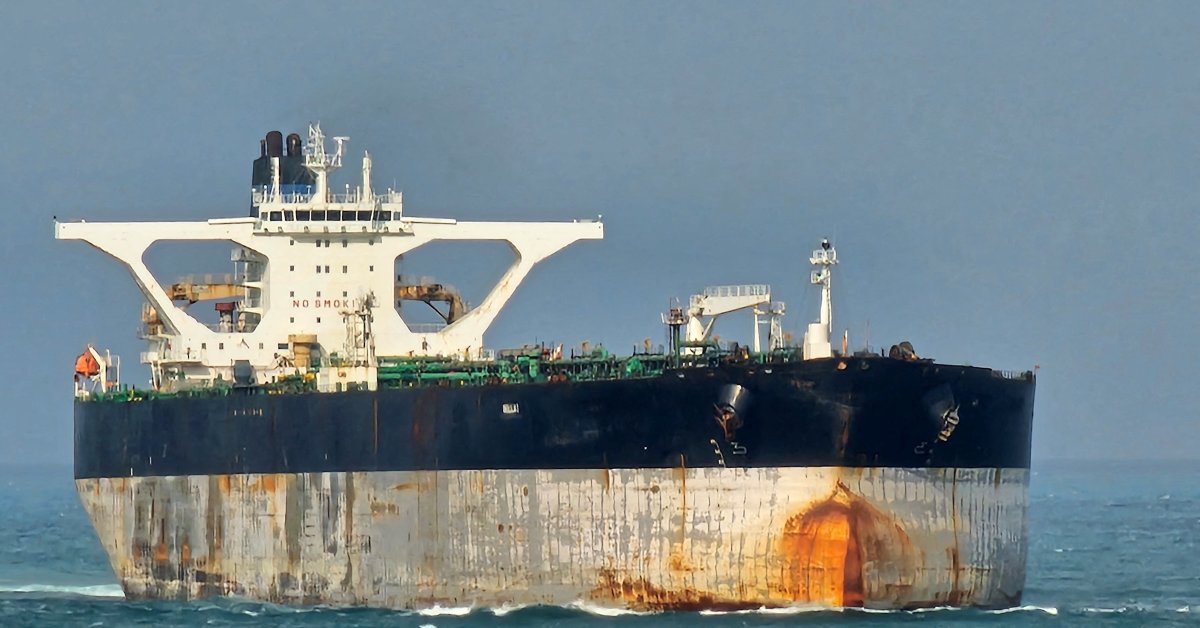
One of the seized vessels was a Russian-flagged tanker that U.S. officials said had violated American sanctions after attempting to sail to Venezuela to load crude oil, prompting a weeks-long pursuit across the North Atlantic before it was boarded in international waters. The ship, previously known as the Bella 1 and recently renamed the Marinera, was not carrying oil at the time. Reuters first reported the interception.
Hours later, U.S. forces apprehended a second vessel, the M Sophia, described by the military as a “stateless, sanctioned dark fleet motor tanker,” in international waters in the Caribbean. Officials said the ship had been engaged in illicit activity and was being escorted to the United States for what they called final disposition.
The seizures came as Secretary of State Marco Rubio laid out the most detailed public account yet of the administration’s plans for Venezuela. Speaking at the Capitol on Wednesday afternoon, Rubio described a three-step approach that begins with stabilizing the country by seizing and selling between 30 million and 50 million barrels of Venezuelan oil—roughly two months of production—with the proceeds controlled by the United States rather than Venezuela’s interim authorities. “That gives us tremendous leverage,” Rubio said.
Under the plan, he said, the U.S. would next ensure that certain companies have fair access to Venezuela’s energy sector and would work to reintegrate opposition forces. A final phase, which he described only as a transition, would involve integrating opposition parties into a new political framework.
Speaking at a conference with energy executives in Miami, U.S. Energy Secretary Chris Wright suggested that the U.S. would control the movement and sale of the country’s oil “indefinitely.”
“We’re going to … let the oil flow, sell that market to United States refineries and around the world to bring better oil supplies,” Wright said. The U.S. must “have that leverage and that control of those oil sales to drive the changes that simply must happen in Venezuela,” he added.
Funds from the sales, he added, will be placed in accounts controlled by the Trump Administration but would “flow back into Venezuela to benefit the Venezuelan people.”
The Energy Department also said in a fact sheet posted online that the U.S. “is selectively rolling back sanctions to enable the transport and sale of Venezuelan crude and oil products to global markets.”
Energy exports are Venezuela’s primary source of revenue, and a partial U.S. blockade imposed last month has already curtailed shipments. If the U.S. ultimately takes control of 30 million to 50 million barrels—roughly two months of Venezuela’s typical production—it would be worth an estimated $1.8 billion to $3 billion at current prices. It remains unclear what exactly Venezuela would receive in return.
Venezuela’s state-owned oil company, Petroleos de Venezuela, said Wednesday that it was engaged in talks with the Trump Administration to potentially allow it to sell the South American nation’s oil.
The Trump Administration ordered what it called a “total and complete blockade” of Venezuelan oil tankers in mid-December, a move intended to force Venezuela’s long-time president Nicolás Maduro from office. Although Maduro has since been captured and is facing charges in the United States, Trump has pledged to keep the blockade in place to pressure Venezuela’s interim government and to control the flow of oil.
White House Press Secretary Karoline Leavitt said Wednesday that Trump is “not afraid” to continue seizing sanctioned oil tankers despite concerns that it could inflame tensions between the U.S. and Russia.
“He’s going to enforce our policy that’s best for the United States of America,” she told reporters. “That means enforcing the embargo against all dark fleet vessels that are illegally transporting oil.”
U.S. officials told multiple outlets that Russia had sent a submarine and other naval vessels to safeguard and escort the tanker during the pursuit by U.S. forces. The New York Times reported, citing two officials, that no Russian vessels were in the vicinity when it was seized, however. The U.S. Coast Guard attempted to board the tanker, which is accused of breaking U.S. sanctions and transporting Iranian oil headed to Venezuela, in the Caribbean last month. The vessel refused to be boarded, turned away, and fled. It then changed its name to the Marinera and re-registered as a Russian vessel.
The U.S. previously sanctioned the tanker in 2024 over alleged links to Iran-backed militant groups across the Middle East, including the Houthis and Hezbollah. Its seizure follows a more than two-week long pursuit.
Russian officials condemned the seizure, arguing that it violated international law. “No state has the right to use force against ships properly registered in the jurisdictions of other states,” Russia’s transport ministry said, citing the United Nations Convention on the Law of the Sea. The United States has not ratified the convention but generally treats its provisions as customary law.
The two seizures come less than a week after the U.S. military captured Maduro in a massive military operation following months of escalating pressure against the Venezuelan government.
Uncategorized,News DeskMilitary,News Desk#Oil #Tanker #Seizures #Escalating #U.S.Russia #Tensions1767835068