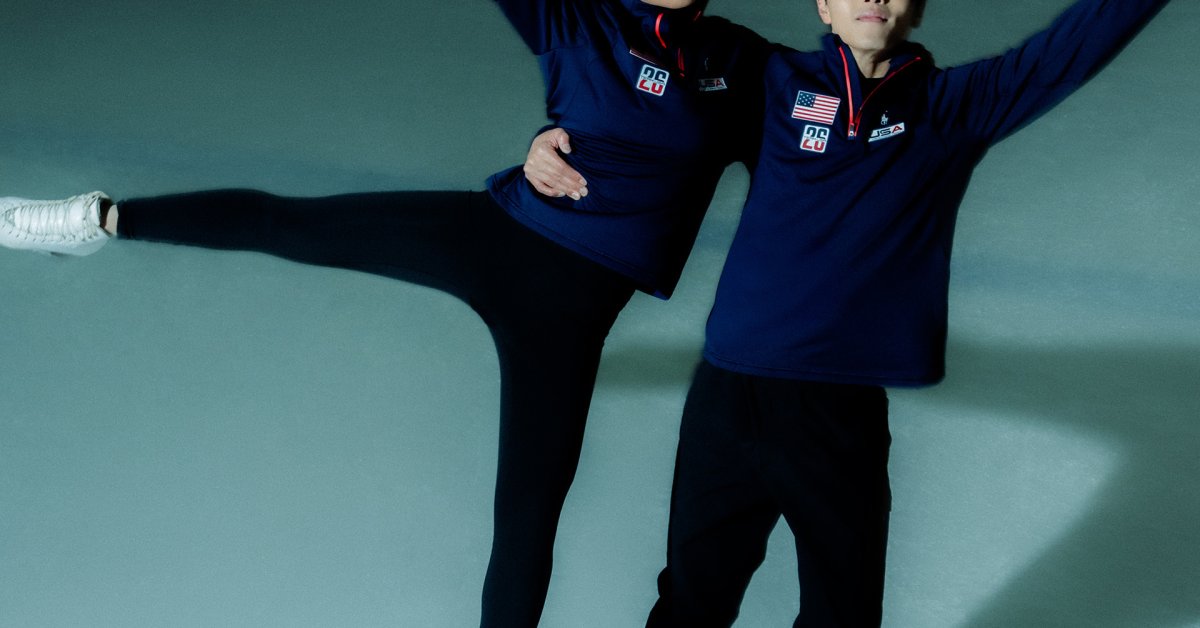
Their pairing alone, as siblings, made them different from other teams in a sport that highlighted romance and sexual tension. “Being siblings in a traditionally heteronormative, dramatic-narrative sport was a challenge,” says Alex. But they also didn’t look like most of their competitors. “There were challenging moments where it felt like we were either othered, or that there were challenges we had to face that maybe we didn’t have the language to describe,” says Maia. Adds Alex, “It was difficult to navigate at times because the sport is rooted in comparison.” And being the rare non-white team was its own catalyst for comparison.
Alex says he’s faced racism, both on and off the ice, throughout his life. “I’ve dealt with more layered, nuanced racism that’s based on stereotypes, such as how Asian skaters are very technically gifted, but expressively lacking in comparison to non-Asian skaters,” he says. “Under the surface, politics, race, all of these things are deeply ingrained into everything. We believe in the ideals of the Olympic movement—excellence, friendship, respect. At the same time, though, it’s not always an equal playing field. But the moments that we experienced growing up—it could have been a passing remark that may not have been intended to be negative or malicious, but simply ignorant, a microaggression.”
Uncategorized,olympicsolympics#Shibutanis #Left #Competitive #Ice #Dancing #Years #Theyre #Aiming #Olympics1767627716