New England Patriots
The 2002 Patriots missed the playoffs, and stalled in part because of some regrettable offseason moves.
In the end, the many parallels the 2025 Patriots drew during their unexpectedly wonderful season to the beloved 2001 edition cannot include the comparison everyone wanted the most.
Those 2001 Patriots stand alone as the most improbable champion in franchise history, and perhaps NFL history. A victory over the Seahawks in Super Bowl LX might have put this season’s Patriots in their company, given the combined 8-26 record the previous two seasons.
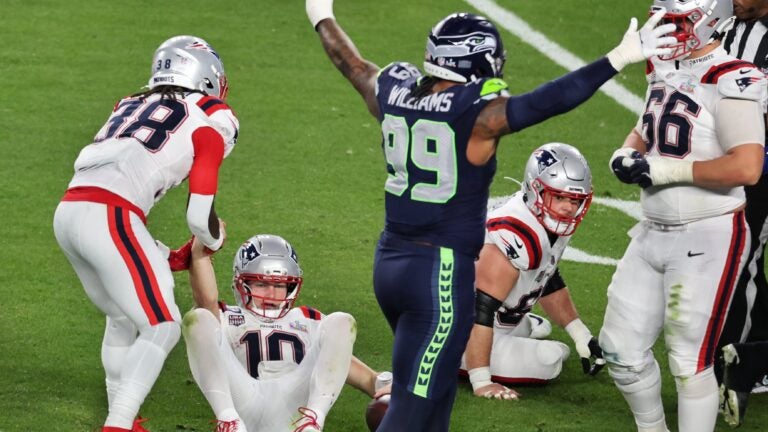
It would have been a fun discussion, but the moment was too big for them, and the Seahawks too good. Quarterback Drake Maye’s mighty struggles and some curious strategic decisions by Mike Vrabel and his coaching staff served as a perhaps necessary reminder that what Tom Brady, Bill Belichick, and their team achieved is near-impossible to duplicate.
(I have a great appreciation for what Vrabel did in his first year as the Patriots coach and how he did it — turns out you can treat people like human beings and still go 17-4 — but I will admit to wondering what Belichick’s defensive game-plan might have looked like against Seattle.)
While these Patriots ponder the lingering what-ifs and begin to find out which scars will last and which ones will fade, the page turns to next season and what comes next.
Hopefully, it will be another way in which they diverge from the ’01 team, and the sequel season following that first Super Bowl title.
It’s logical to presume that the 2026 Patriots will have a worse regular-season record than this season, when they went 14-3 and won 10 straight games while playing — stop me if you’ve heard this 1,960 times before — a historically easy schedule.
I’ll say this preemptively: there would be no shame in going, say, 12-5 or even 11-6 next year versus a much tougher schedule, which will include home games versus the Broncos, Packers, and Vikings, and road matchups against the Bears, Lions, Chiefs, Jaguars, and (gulp) Seahawks, plus the usual home-and-away with the Bills. That is a gauntlet.
But what can’t happen, in multiple respects, is what happened in 2002. Due to some growing pains, the weight of the giant bullseye on their backs, and some dubious personnel decisions, the Patriots took a step back before vaulting into their first dynasty phase with back-to-back titles in 2003-04.
That 2002 team looked like a juggernaut early. It christened Gillette Stadium with a 30-14 win over the Steelers on Monday Night Football and started 3-0, averaging 38.3 points per game. But a new defensive scheme that featured a trio of safeties — Lawyer Milloy, Tebucky Jones, and Victor Green — was soon exposed, the defense couldn’t stop the run (four opponents ran for more than 220 yards), and the Patriots lost four in a row after that rapid start. They were annoyingly streaky all season, really, winning 5 of 6 after those four straight losses, then dropping two in a row heading into their regular-season finale with the Dolphins.
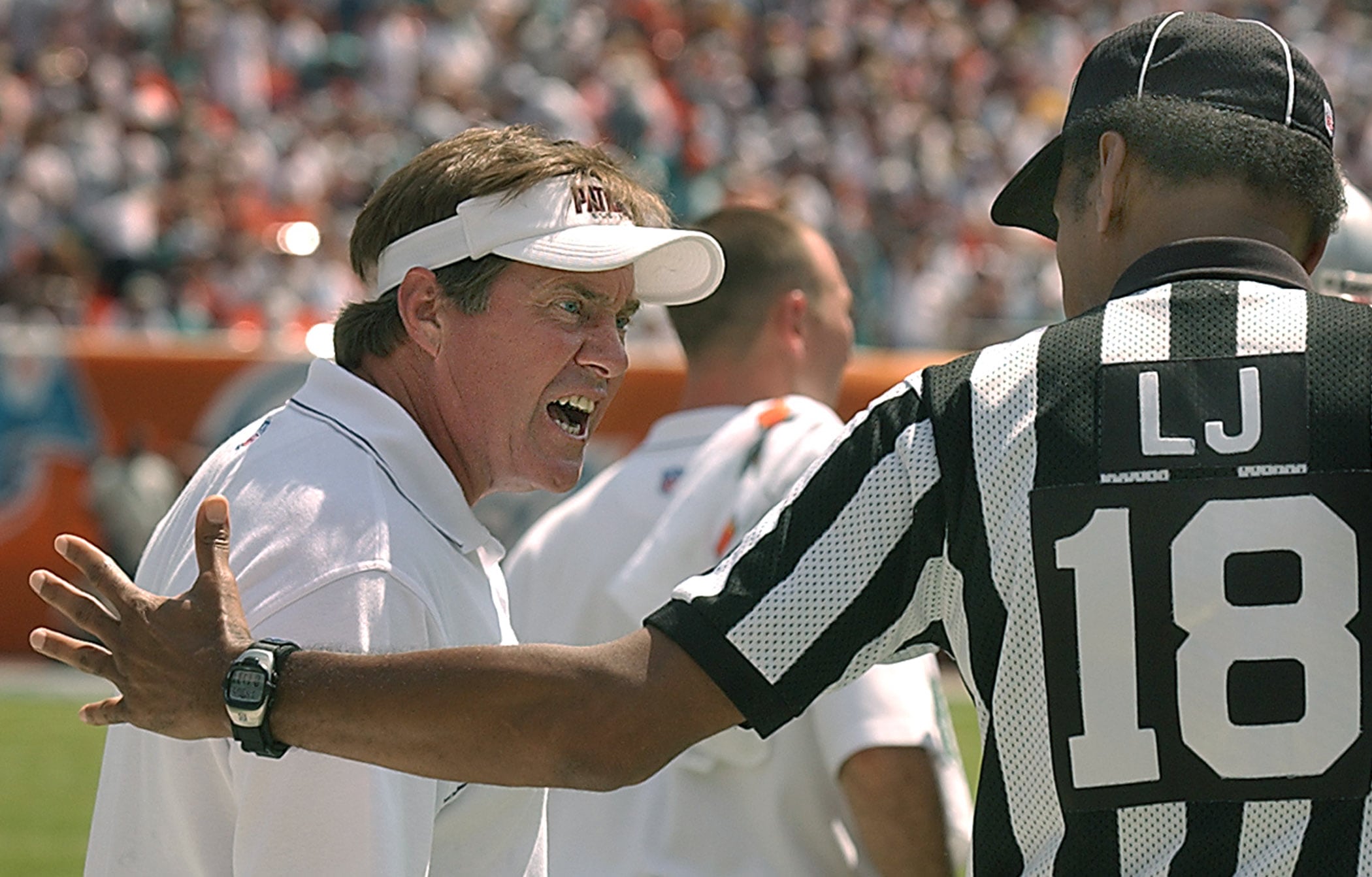
The ’02 Patriots fought to the end, overcoming an 11-point deficit in the final five minutes of the finale to force overtime, then winning, 27-24, on an Adam Vinatieri 35-yard field goal. (It was not the most clutch kick of his career, as you may have heard.)
But with a 9-7 record, they were left out of the playoffs when the Jets beat the Packers later that Sunday to clinch the AFC East on a tiebreaker. (Footnote: The Jets did not win the Super Bowl that year either.)
As Vrabel, a second-year Patriot in 2002, noted Tuesday during his gracious coda-on-the-season press conference, changes are inevitable this offseason. The chance to play for Vrabel and with Maye have made New England a desirable destination for pending free agents and players looking for a change in scenery.
They need to be cautious about which players they add to their mix, which had exceptional chemistry this season.
The 2002 Patriots stalled in part because of some regrettable offseason moves. The draft was strong enough, a solid B+, with Deion Branch (second round) and David Givens (stolen in the seventh) emerging as pretty much the only young receivers Brady ever trusted. The first-round pick, tight end Daniel Graham, had a solid 11-year career, but it’s stunning in retrospect that Belichick passed up Miami safety Ed Reed at No. 21.
Christian Fauria, formerly of the Seahawks, worked out well as a free-agent addition at tight end. But the flops included Green, whose speed was gone; receiver Donald Hayes; and tight end Cam Cleeland. The worst of the group was defensive tackle Steve Martin, who made 13 tackles in 14 games, never saw a notepad that he didn’t want to fill, and finally was cut in December.
It was the offseason after 2002 when Belichick really supplemented the roster with high-end outside talent, signing safety Rodney Harrison, coveted linebacker Rosevelt Colvin, nose tackle Ted Washington, and crushing it in the draft with defensive end Ty Warren, safety Eugene Wilson, center Dan Koppen, and multiple other contributors.
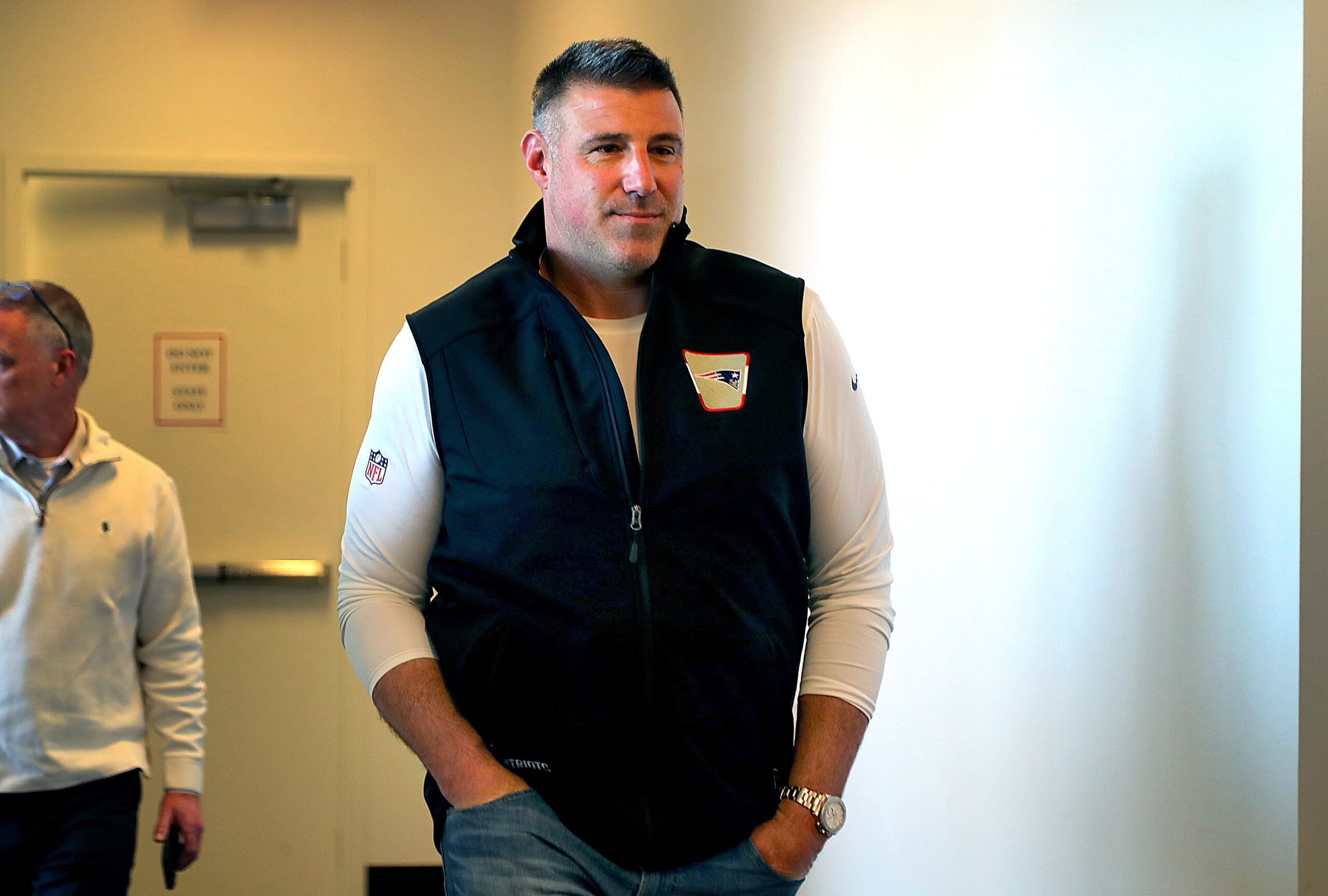
Vrabel and the braintrust have the resources to make similar caliber upgrades this offseason.
It’s easy to forget in the aching aftermath of a Super Bowl loss, but the Patriots are multiple years ahead of schedule. Can they expedite things a little more, and avoid the Super Bowl hangover that likes to show up after victory and defeat?
It won’t be easy, but here’s hoping the ’26 version skips the stagnation phase and spends next season giving us flashbacks to the ’03 Patriots. This time, all the way through the final scene.
Sports,Chad Finn,New England Patriots#Patriots #didnt #finish #ancestors #Lets #hope #dont #produce #similar #followup #season1770915594