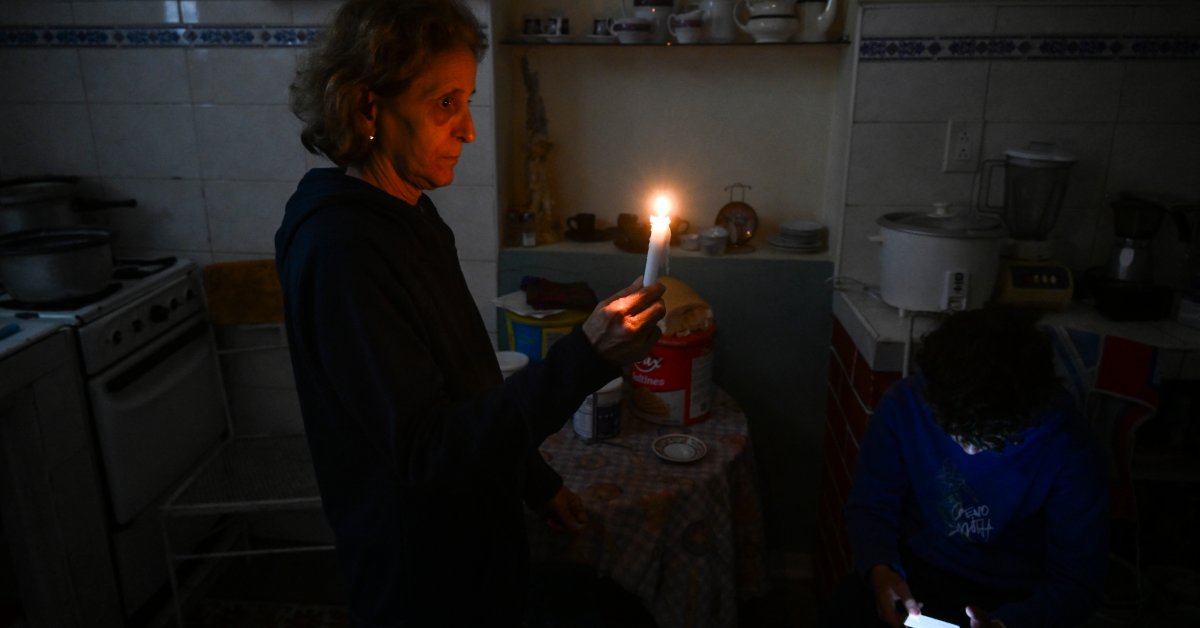
A United States-imposed blockade on oil to Cuba is causing a severe energy crisis on the island that has resulted in rolling blackouts, a strain on hospitals and the grounding of jets.
On Monday, Cuban aviation authorities notified international airlines that the country is running out of jet fuel and that refuelling services for airlines will be suspended for a month, according to data from the Federal Aviation Administration. Air Canada said it was suspending its service to the island as a result.
It comes after President Donald Trump signed an executive order last month announcing that he would impose tariffs on any country that sells or provides oil to Cuba, which is run by a communist government that the Trump Administration would like to replace.
Read more: What’s Happening With the U.S. and Venezuela, Explained
The island’s economy was already struggling due to decades of U.S. sanctions, but things rapidly deteriorated in January when shipments were halted from its main supplier, Venezuela, following a U.S. military operation to depose President Nicolas Maduro.
Mexico, another oil supplier to Cuba, also announced on Monday that it was suspending its shipments after Trump threatened to impose tariffs on Mexican exports to the U.S.
The Financial Times reported in late January that Cuba only has oil reserves that could last for “15 to 20 days” at the current level of demand.
Some medical facilities have also been severely impacted by the fuel shortages. Local media reported that some provincial hospitals have canceled surgeries and outpatient transfers. Critical medical supplies such as painkillers, gauze, and antibiotics are also unavailable.
The fuel shortage has also strained the country’s food supplies. Last week, the U.S. gave $6 million in humanitarian aid to the country, the State Department said. The supplies include rice, beans, pasta, cans of tuna and solar lamps that will be delivered by the Catholic Church and Caritas. Mexico is also sending more than 814 tons of food and hygiene products to Cuba, which is scheduled to arrive in a few days.
The United Nations warned last week that the “vast majority of Cubans” are being hit by rolling blackouts, and that the humanitarian collapse would “worsen, and if not collapse, if its oil needs go unmet.”
“The last two years have been quite tough,” said Francisco Pichon, the most senior United Nations official in Cuba.
Prior to the oil blockade, the Caribbean island suffered from a withering economy due to its dwindling tourism business since the Covid-19 pandemic. Last year, Hurricane Melissa also swept Cuba’s five provinces, displacing more than 735,000 people while destroying homes and basic infrastructure.
In recent days, as the energy crisis has worsened, the Cuban government has called for dialogue with the U.S. government. Foreign Minister Bruno Rodriguez on Monday denounced the “cruel aggression” of the United States, which he said was aimed at “breaking the political will of the Cuban people.”
“The situation is tough and will demand great sacrifice,” said Rodriguez, while reiterating Cuba’s “willingness to engage in dialogue”, though on its own terms without pressure.
Trump said in early February that the U.S. is engaging in diplomatic conversations with “the highest people” in Cuba.
“It doesn’t have to be a humanitarian crisis. I think they probably would come to us and want to make a deal,” Trump said.
Trump’s remarks came not long after Secretary Marco Rubio acknowledged that the U.S. would like to see the end of the communist regime in Cuba.
“That doesn’t mean that we’re going to make a change, but we would love to see a change,” Rubio told a Congressional hearing late last month.
“There’s no doubt about the fact that it would be a great benefit to the United States if Cuba was no longer governed by an autocratic regime,” Rubio added.
Cuba’s deputy foreign minister dismissed that possibility in an interview with CNN.
“We’re not ready to discuss our constitutional system as we suppose the U.S. is not ready to discuss their constitutional system, their political system, their economic reality,” Carlos Fernández de Cossío said.
Uncategorized,News DeskCuba,News Desk#Rolling #Blackouts #Hospital #Shortages #U.S #Oil #Blockade #Impacting #Cuba1770673273