With the fatal shootings of Alex Pretti and Renee Good fresh on their minds, Minneapolis Mayor Jacob Frey stood before a room full of fellow city leaders last week and delivered a dire warning.
“We are on the front line of a very important battle, ” Frey said at the annual meeting of the U.S. Conference of Mayors in Washington, D.C. “If we do not speak up, if we do not step out, it will be your city that is next.”
He’s not alone in feeling the pressure. For nearly a month, Minneapolis has felt to many residents like a city under siege, leaving mayors across the country responding to fear and anxiety that one of their communities will be the Trump Administration’s next target.
“It is striking how front of mind this is for mayors from all political persuasions in all corners of this country,” San Diego Mayor Todd Gloria tells TIME.
Some cities are already pushing back by moving to curtail ICE’s operations in their communities. In Philadelphia, a veto-proof majority of council members are advancing a package of legislation known as “ICE Out” bills that would, according to the Philadelphia Inquirer, ban ICE agents from wearing masks, mandate agents obtain a judicial warrant to access nonpublic areas, and restrict city police from cooperating with the agency, among other measures.
Read more: How ICE Became an Agency in Crisis Under Trump
New York City Mayor Zohran Mamdani, who has been calling for ICE to be abolished, is set to sign a bill banning ICE from operating from any of the 19 city correctional facilities while further limiting city officials from working with ICE, the New York Post reported. The bill was previously vetoed by former Mayor Eric Adams, which was then overridden by the city council, setting the stage for Mamdani to sign it into law.
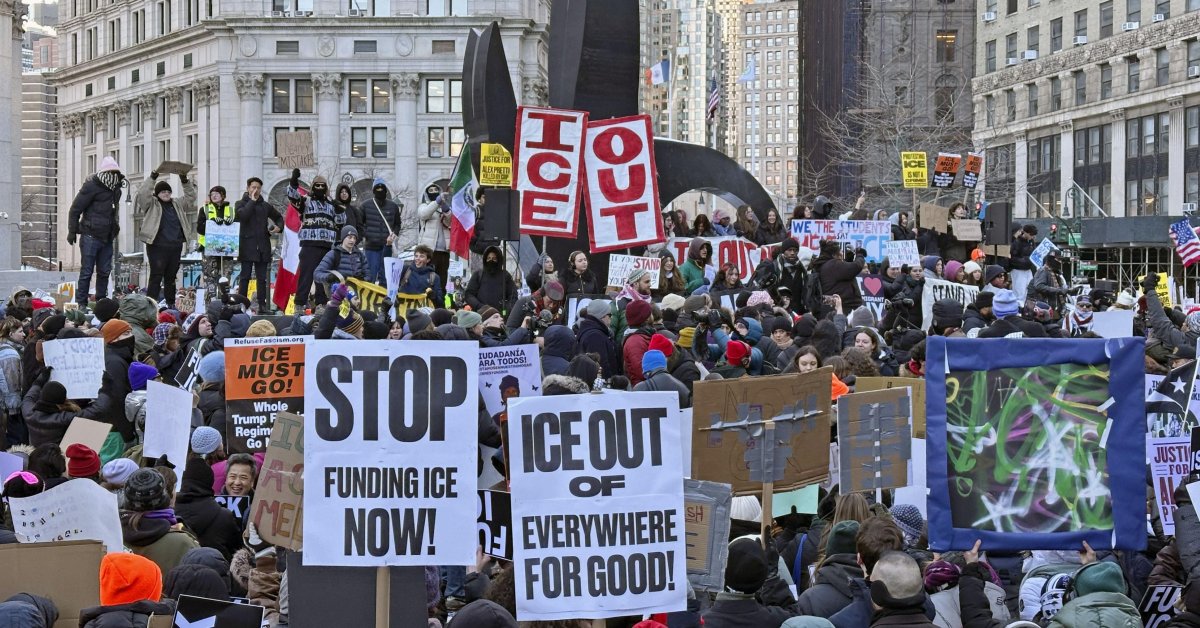
As anti-ICE protests and strikes expand nationwide, tensions between local governments and the White House are becoming increasingly visible. The Supremacy Clause of the Constitution gives the federal government enormous power over cities, superseding any conflicting local laws or regulations. While that limits the extent to which cities can fight efforts by federal immigration agents, mayors aren’t powerless in doing more to protect their residents.
“I think a mayor’s chief responsibility in these situations is to advocate for better communication and collaboration, to be transparent with our residents, and to just try to preserve as much order in our cities as possible, ” says Oklahoma City Mayor David Holt. The Republican mayor added that above anything, residents expect law enforcement to follow the rule of law—an idea that many now view as an open question.
“We’ve been enforcing immigration laws for a century. We’ve been operating in the ICE era for 20 years. So mostly this has worked for most Americans and until recently,” Holt says. ”So how can we get back to that type of enforcement again?”
For the past year, the Trump administration has framed its surging of federal law enforcement in cities like Los Angeles, Washington, D.C. and Minneapolis as a crackdown on crime. But crime rates across the U.S. have been dropping to the lowest levels in decades, and for mayors who are managing an understaffed local police force, Trump’s aggressive approach risks diverting scarce resources away from building better trust in vulnerable communities.
“I think why mayors are so vocal on this issue is that we understand that when this chaos passes, it’ll be mayors who are left to clean up pieces,” Gloria says.
There are signs, however, that the White House may be pulling back. Last week, Trump sent his border czar Tom Homan to take over federal operations in Minneapolis from Gregory Bovino, a Border Patrol commander who was the public face of the ICE surge in Minnesota and was widely viewed as encouraging more aggressive tactics by federal agents. Homan said he has requested plans to withdraw some of the thousands of federal immigration officers in Minnesota, and will push those plans through if local law enforcement will work more closely with ICE. Homan has maintained that this does not mean the federal government is surrendering.
“If you’re in the country illegally, you’re never off the table,” Homan said in a statement.
As the mayor of San Diego, the country’s largest border city, Gloria pointed out that the real conversation that’s missing from the Minneapolis crisis is a broken immigration system that needs to be reformed.
“I’m absolutely opposed to this overly aggressive and lawless approach to immigration enforcement, and a part of why the president probably assumes that this is necessary is that people don’t feel the current system works and overstay on a visa. And so when are we going to take up that conversation? When can we see action on this?” he says.
Uncategorized,News DeskCrime,News Desk#ICE #Gains #Momentum #Cities #Country #Action1770066638