For the first few days of the World Economic Forum in Davos, politicians, civil society leaders, and business executives waited in nervous anticipation of President Donald Trump’s address to the conference—and any potential signal that he might try to make good on his promise to annex Greenland.
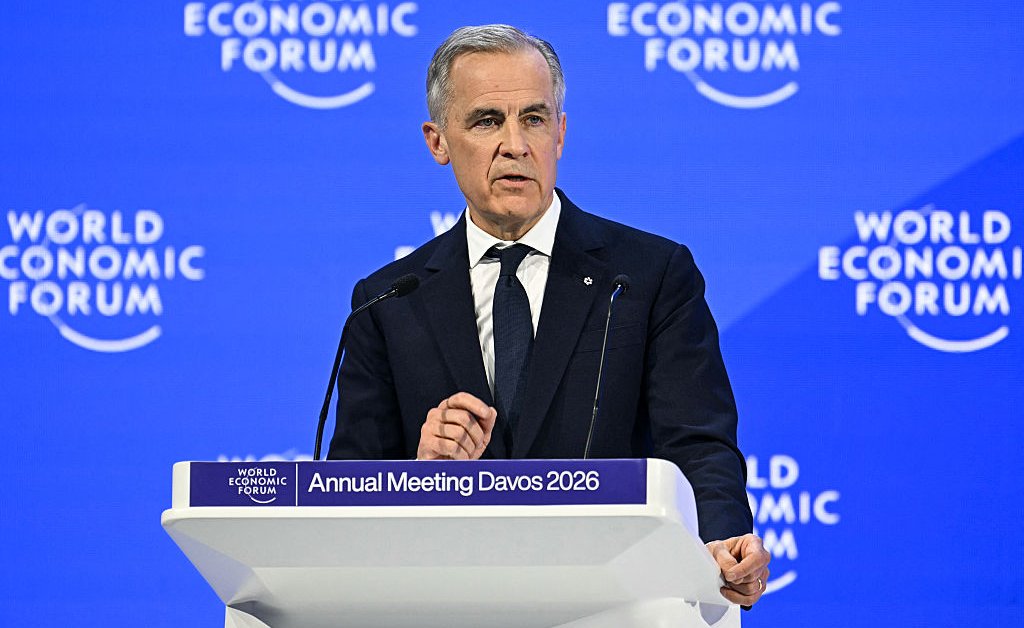
Trump’s speech came and went, but it wasn’t the most significant moment of the week-long confab. Instead, the biggest splash may have come the day before from the U.S.’s northern ally turned rival Canada. In a speech bound for the history books, Canadian Prime Minister Mark Carney described a “rupture” in the world order and called for middle powers like Canada to stand up to bullies. He described the emergence of new coalitions of the willing to address issues aligned with their interests and values—rather than all nations following signals from the U.S. as they have been. “We’re pursuing variable geometry, in other words,” said Carney, “different coalitions for different issues based on common values and interests.”
This reshaping will touch every aspect of the economy—and importantly it will have profound effects for energy and climate.
The most obvious impact is the divergent approach to energy technologies. In Davos, Trump Administration officials touted fossil fuels while panning renewables. “Economically, it’s been a failure,” Energy Secretary Chris Wright said of global investment in renewable energy in a fireside chat. That stance will come as no surprise to anyone who has even loosely followed Trump’s approach to energy, but in Davos the contrast to the rest of the world’s thinking was striking.
Ursula Von Der Leyen, the head of the European Commission, said the European Union would double down on nuclear and renewables to free the bloc from “manipulation” by other countries—a group which might now reasonably be interpreted to include the U.S. “Homegrown, reliable, resilient, and cheaper energy will drive our economic growth and secure our independence,” she told a plenary session.
French President Emmanuel Macron said he would welcome more Chinese investment in key sectors—presumably including renewable energy where the country is a key player. The week before Davos, Carney traveled to China and agreed to all but eliminate Canada’s steep tariffs on Chinese EVs, opening his country to China’s cheap and popular automobiles to the detriment of U.S. automakers.
The U.S., however, has allies in its push to entrench fossil fuels. The CEO of Saudi Aramco, Saudi Arabia’s state-owned oil company, touted continued demand for oil as he made a case to leaders at Davos for the long-term future of his country’s key export. (Though it is also investing in renewable energy.)
Climate change wasn’t exactly the main subject for top government officials this week, with pressing geopolitical concerns taking up most of the oxygen. But it’s easy to see how Carney’s coalition of the willing approach might unfold once leaders return from Davos and, one day, turn their attention to cutting global emissions. Indeed, before becoming Canada’s prime minister, Carney had championed the idea of “carbon clubs,” where countries would join together to reduce emissions—with trade penalties for laggards outside the club. This year, the E.U.’s border carbon adjustment mechanism—which taxes emissions from some products at the border—took effect. Other countries like Brazil are considering related policies.
The response to Trump’s energy posturing from the executives gathered in Davos was mixed. Behind the scenes, many insisted that their sustainability work would continue regardless of the Trump Administration—even as they avoid talking about it publicly. The long-term signal remains clear, they argue. But there’s no question that at the very least this new global realignment increases the complexity of managing energy and climate work.
When the dust settles on this moment of chaotic and rapid change, the international climate regime will look dramatically different with new alliances and international relationships. The U.S. won’t necessarily be alone, but it may find that standing apart comes at a cost.
To get this story in your inbox, subscribe to the TIME CO2 Leadership Report newsletter here.
This story is supported by a partnership with Outrider Foundation and Journalism Funding Partners. TIME is solely responsible for the content.
Uncategorized,climate change,Leadership ReportLeadership Report,climate change#Climate #Energy #Implication #Hidden #Mark #Carneys #Davos #Speech1769203057