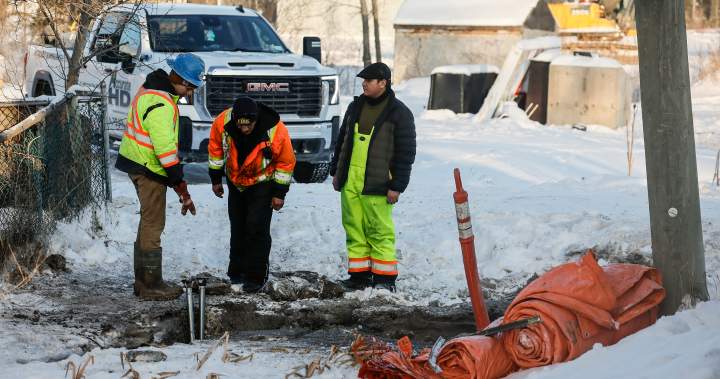
The chief of a First Nation in the throes of severe water issues, including flooding and backed-up sewage, says seven members of the Canadian Armed Forces are to arrive in his northern Manitoba community on Monday.

Pimicikamak Cree Nation Chief David Monias says in a social media post that members are to provide technical assistance, assessments and support related to critical infrastructure and recovery operations.
“They will work with our people,” the chief of the community about 500 kilometres north of Winnipeg said on Sunday.
“Water and sewage services are a big issue. While we can fix houses, it is hard to fix the psychological and emotional trauma our people experience and to provide clean running water and proper sewage disposal.”
Monias originally said eight CAF members would be arriving, but he and the Armed Forces later said the number was seven.
The CAF confirmed Sunday afternoon that members of the Joint Operational Support Group, based in Kingston, Ont., are planning to be in the First Nation for two weeks.

Get daily National news
Get the day’s top news, political, economic, and current affairs headlines, delivered to your inbox once a day.
“The Canadian Armed Forces are supporting the federal, provincial, municipal and First Nations partners who are working diligently in service of Canadians in need … in order to stabilize the situation and to reassure residents in affected areas,” the military said in a statement.
CAF said the members will arrive in Manitoba Sunday night, and will get to the First Nation on Monday.
Monias said plumbers and other workers are also arriving to help with the water and electrical issues, but it has been tough finding them adequate washrooms and shower facilities.
Meanwhile, some workers already in the community are sick after losing access to clean water, he said.
He said a mobile camp that can accommodate 30 people is being set up and the community has asked a company to erect a temporary water treatment plant, so living conditions for workers can improve and repairs aren’t delayed.


The First Nation learned early this month that a days-long power outage had left many homes and other buildings with frozen water systems, sewer backups, electrical issues and burst pipes.
The approximately 4,000 people who were sent to other communities during the power outage haven’t returned due to the devastating water issues.
Federal, provincial and First Nations leaders toured the community last week as work to determine the extent of damage to the more than 1,300 homes continued.
“We continue to see significant impacts across the community,” Monias said Sunday.
“Some household water tanks remain completely frozen, while others are beginning to thaw. As thawing occurs, crews are finding leaks, sewer backups, and additional damage.”
This is the second time in less than a year Pimicikamak Cree Nation residents have been displaced after a wildfire last spring forced them out.
“Chief and council acknowledge the frustration, stress, and hardship our people are facing,” Monias said.
“These are not easy circumstances, and the situation continues to change daily. Our leadership remains focused on protecting health and safety, restoring essential services, and holding governments accountable for long-standing infrastructure failures.”
© 2026 The Canadian Press
Canada,Canadian Armed Forces,Pimicikamak Cree NationPimicikamak Cree Nation, Canadian Armed Forces, Canada#Military #Manitoba #Nation #dealing #water #issues #Monday #CAF1768227853